
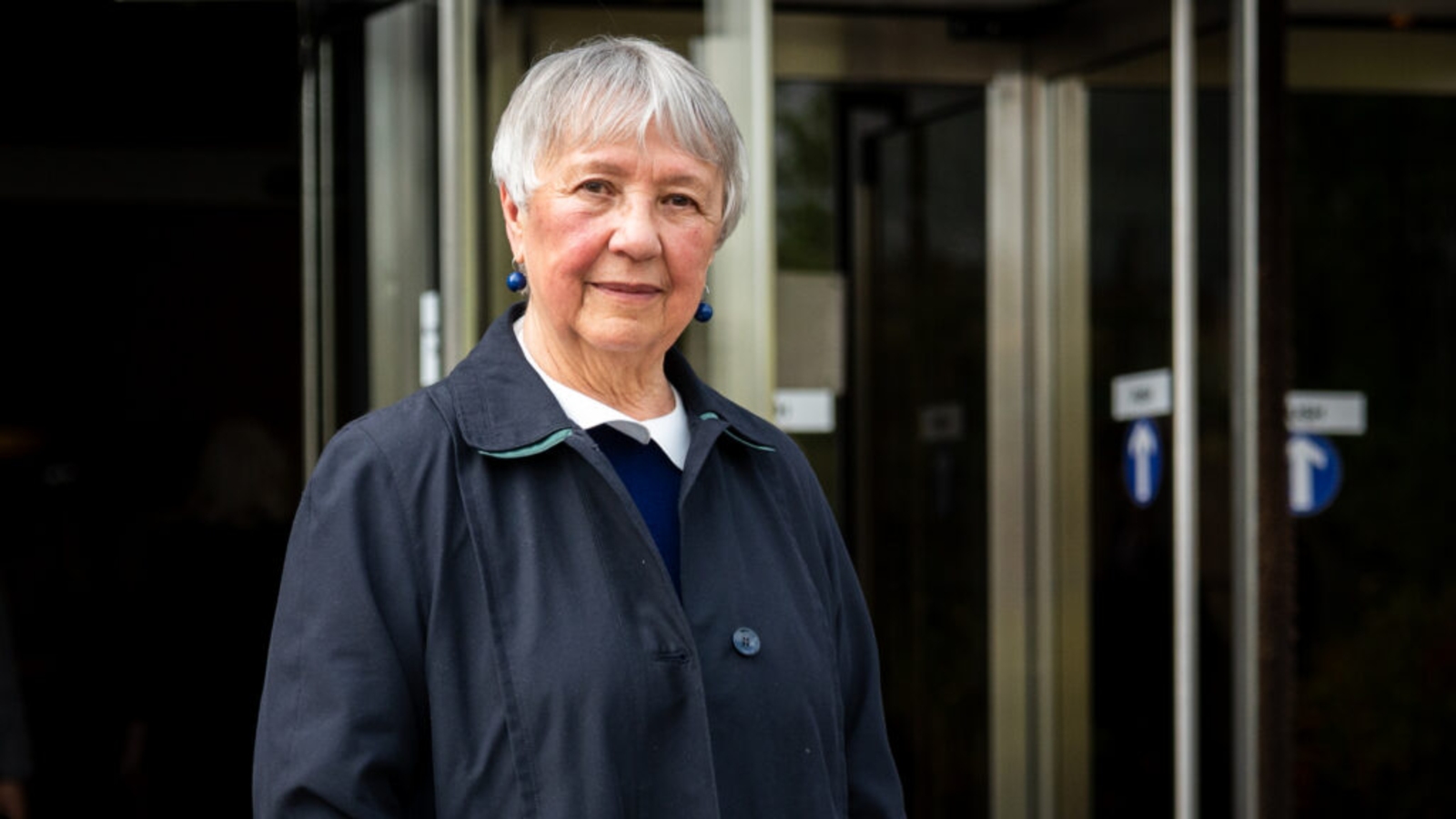
The streets of Glasgow (my home town) recently witnessed a legal showdown that should alarm every advocate for human rights. Rose Docherty, a 75-year-old grandmother, stood outside Queen Elizabeth University Hospital with a small sign that read: “Coercion is a crime, here to talk, only if you want.” For this simple offer of a consensual conversation, Rose was arrested, held in a cell for hours, and subjected to a seven-month criminal prosecution. This week, a judge finally dismissed the charges, marking a massive victory for free speech - but the battle for the unborn and the vulnerable is far from over.
The Verdict: "Irrelevant" Charges and a Breach of Rights
On Monday, April 27, 2026, Sheriff Stuart Reid at Glasgow Sheriff Court ruled that the charges against Rose were "irrelevant" and represented a breach of her Article 10 rights (freedom of expression). The prosecution admitted they had no evidence she had actually influenced anyone.
Reacting to the victory, Rose Docherty said:
"Simply for being available for the lonely, the afraid and the coerced, I have been treated like a violent criminal... This verdict is a major victory for free speech in Scotland and the UK. It shows that peacefully offering consensual conversation on a public street, which is all I have ever done, can never be a crime."
The Injustice of Forced Silence
While the media frames this as a free speech win, the pro-life movement sees the deeper injustice: The state is attempting to isolate women at their most vulnerable. By criminalizing Rose’s sign - which specifically highlighted that "coercion is a crime" - the authorities were effectively protecting the process of abortion while silencing any mention of the pressure many women feel. If "safe access" means removing every alternative voice, then it isn't "access" at all; it is a clinical conveyor belt.
Jeremiah Igunnubole, Legal Counsel for ADF International, noted the absurdity of the prosecution:
"The prosecution of Rose has no place in a free and democratic society... It is far worse that the Crown Office... brought these charges without conducting even the most basic investigative inquiries."
Coercion vs. Compassion
This case highlights a central pro-life truth: Abortion is often the result of a lack of choice, not the exercise of it. Rose wasn't there to "protest" or "harass"; she was there to stand in the gap for women who feel they have no other option.
Rose described the grueling legal process as a "form of punishment" itself:
"The resources used by the authorities to target me, a 75-year-old grandmother, for offering to speak with people, have been totally wasted. Authorities should focus on tackling real crime in Glasgow, not censoring a Catholic grandmother."
From the Sidewalk to the Sofa: The Most Extreme Laws in the World
Scotland’s Abortion Services (Safe Access Zones) Act is arguably the most restrictive of its kind globally, creating a 200m "thought-boundary" that doesn't stop at the front door. In 2024, the Scottish Government sent letters to residents within these zones, warning that activities even inside a "private place (such as a house)" could be a criminal offence if they can be "seen or heard within the Zone." The potential penalty? A staggering fine of £10,000 or more.
The subjectivity of this law is chilling. When asked if "performative prayer" seen through a window could lead to prosecution, the bill’s author, Gillian Mackay MSP, admitted: "That then depends on who’s passing by the window." (Source: BBC Scotcast). This effectively creates a "Window Test" for thoughtcrime, where a citizen's freedom depends entirely on the feelings of a passer-by.
This draconian reach drew international condemnation, notably from JD Vance at last year's Munich Security Conference, who cited the Scottish letter as a warning that Western democracies are now threatening "even private prayer within their own homes".
By criminalizing a grandmother like Rose for a sign about "coercion," the state isn't just policing the streets - it is attempting to mandate a clinical silence that reaches into our very living rooms.
When Compassion is Criminalised, Silence is the Real Danger
Rose Docherty’s victory is a landmark win, but it also serves as a stark warning. When the state attempts to classify an offer of help as a "criminal act" - whether on a pavement or behind a window - it isn't protecting women; it is isolating them.
By removing the last opportunity for a woman to hear that she has another choice, "buffer zones" become state-enforced silence. Rose’s sign said it best: "Coercion is a crime." It is time we stop the state from coercing the public into silence and stand up for the right to offer hope, wherever it is needed.