
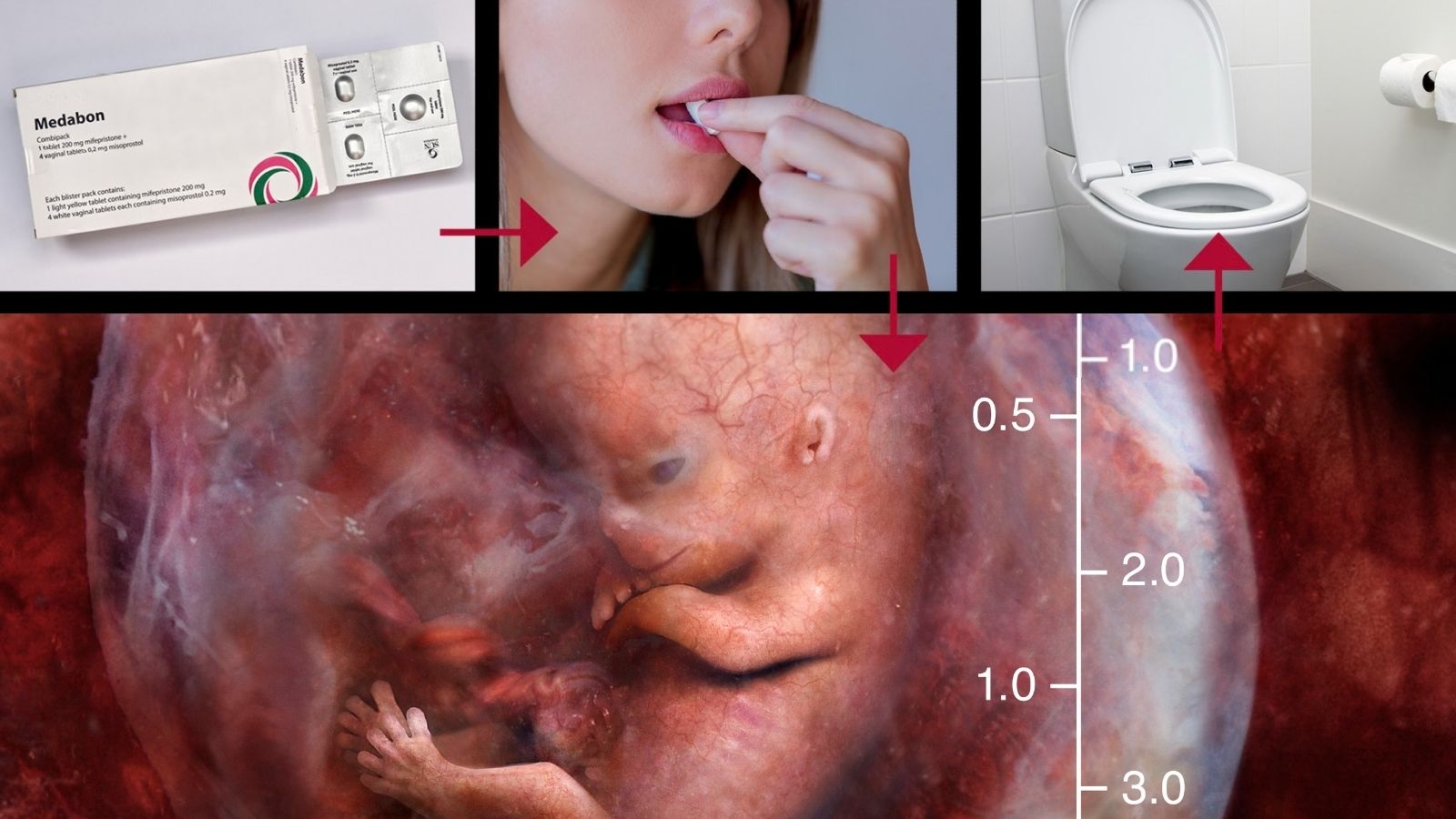
The NHS calls abortion healthcare. Do you?
Genuine medical care exists to preserve life, treat disease, and restore health. Yet today, tax-funded abortion services operate under the badge of "healthcare"— when the procedure is designed to end a human life and frequently causes physical and psychological harm to women.
What other healthcare procedure is only successful if a human being dies?
Is abortion really healthcare?
The Collins Dictionary defines healthcare as "The prevention and treatment of illness or injury."
To evaluate whether abortion really is healthcare, we must ask three foundational questions:
-
Is pregnancy an illness or injury? Pregnancy is a healthy, natural biological state through which human life is carried and nurtured.
-
Does abortion heal or harm? The purpose of abortion is for a pregnant woman not to be pregnant anymore - which is only achieved by intentionally killing the baby in her womb. The procedure carries significant risks of physical trauma and mental health complications for the mother.
-
Does abortion uphold the Hippocratic Oath? The historic foundation of modern medicine centres on the directive to "do no harm." True healthcare protects both mother and baby. Abortion providers fail both by ending one life and harming the other.
See the tragic reality of abortion for yourself (warning contains graphic abortion victim imagery)
Distinguishing real medical care from elective abortion
While pregnancy itself is a healthy biological process, a mother may face serious medical conditions during pregnancy. In these complex cases, doctors treat both mother and child on an individual basis.
When necessary medical treatment is required to save a mother's life (such as surgical intervention for an ectopic pregnancy), the primary intention is to preserve life where possible. This is fundamentally different from an elective abortion, where the direct purpose is to end a human life in the womb.
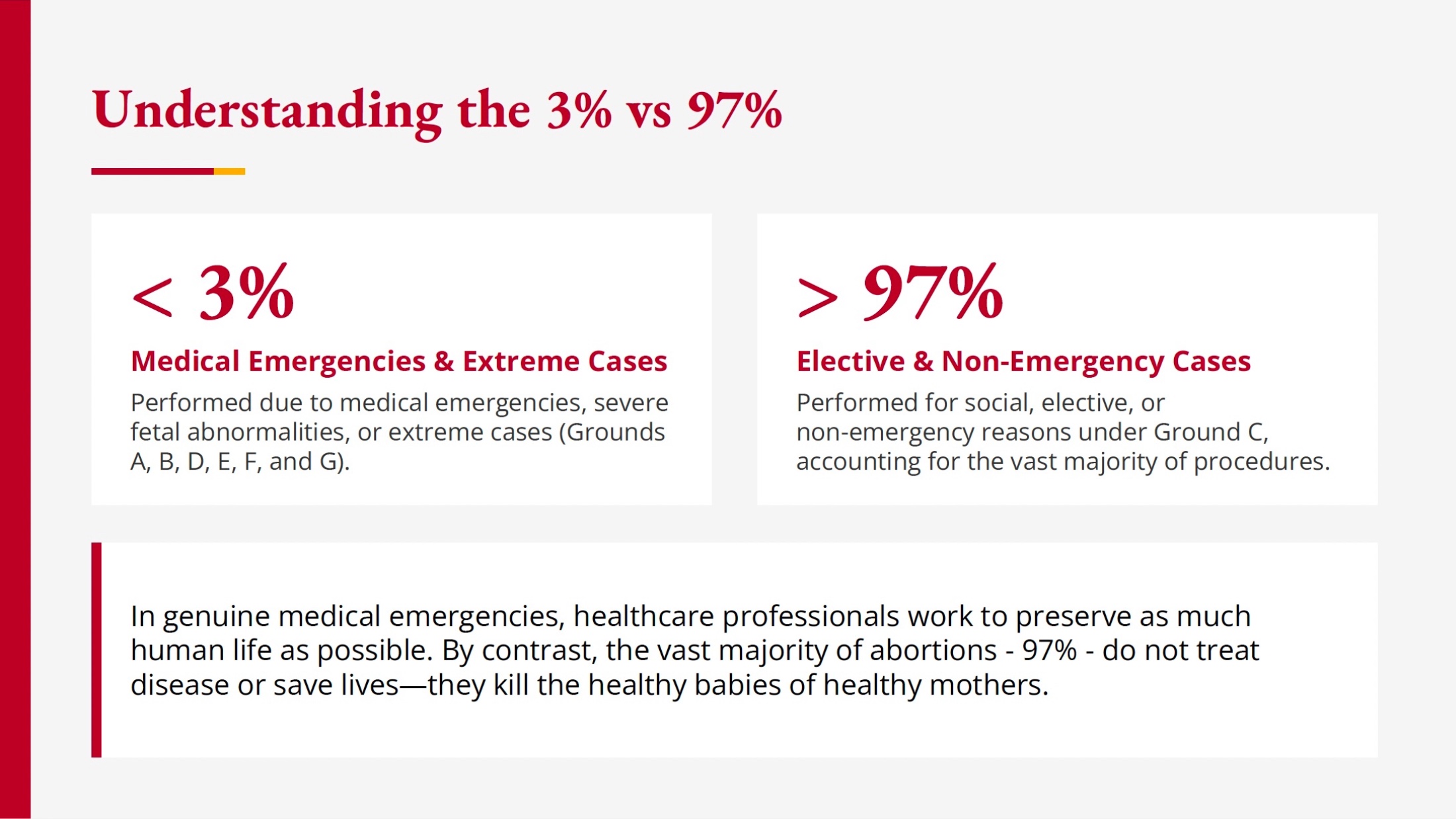
Less than 3% of all abortions take place due to extreme circumstances such as rape, fetal abnormality or to protect the life of the mother. In genuine medical emergencies, healthcare professionals work to preserve as much human life as possible. By contrast, the vast majority of abortions - 97% - do not treat disease or save lives—they kill the healthy babies of healthy mothers.
The rise of abortion “Pills by Post”
Initially introduced as a temporary emergency measure during COVID, medical abortion pills sent by post to women’s homes, now account for 72% of all abortions in England and Wales. That was 200,745 babies aborted via pills-by-post in 2023*.
How the pills work
The first pill, mifepristone, blocks the hormone progesterone needed for the continuation of the pregnancy, effectively suffocating the baby. The second abortion pill, taken 24-48 hours later, is called misoprostol and causes contractions expelling the baby.
“Do not use in pregnancy”
In BPAS’ Pills-by-Post instructions on how to take the medication, it has the following warning:
Please note the foil on the reverse of these tablets is marked with a warning that says ‘Do not use in pregnancy’ This is because misoprostol can cause miscarriags which is why it is used in abortion care.
“Bleeding”
BPAS states:
Not everyone will pass blood clots during a medical abortion, but for those who do, the clots should be no larger than a lemon...
BPAS continues:
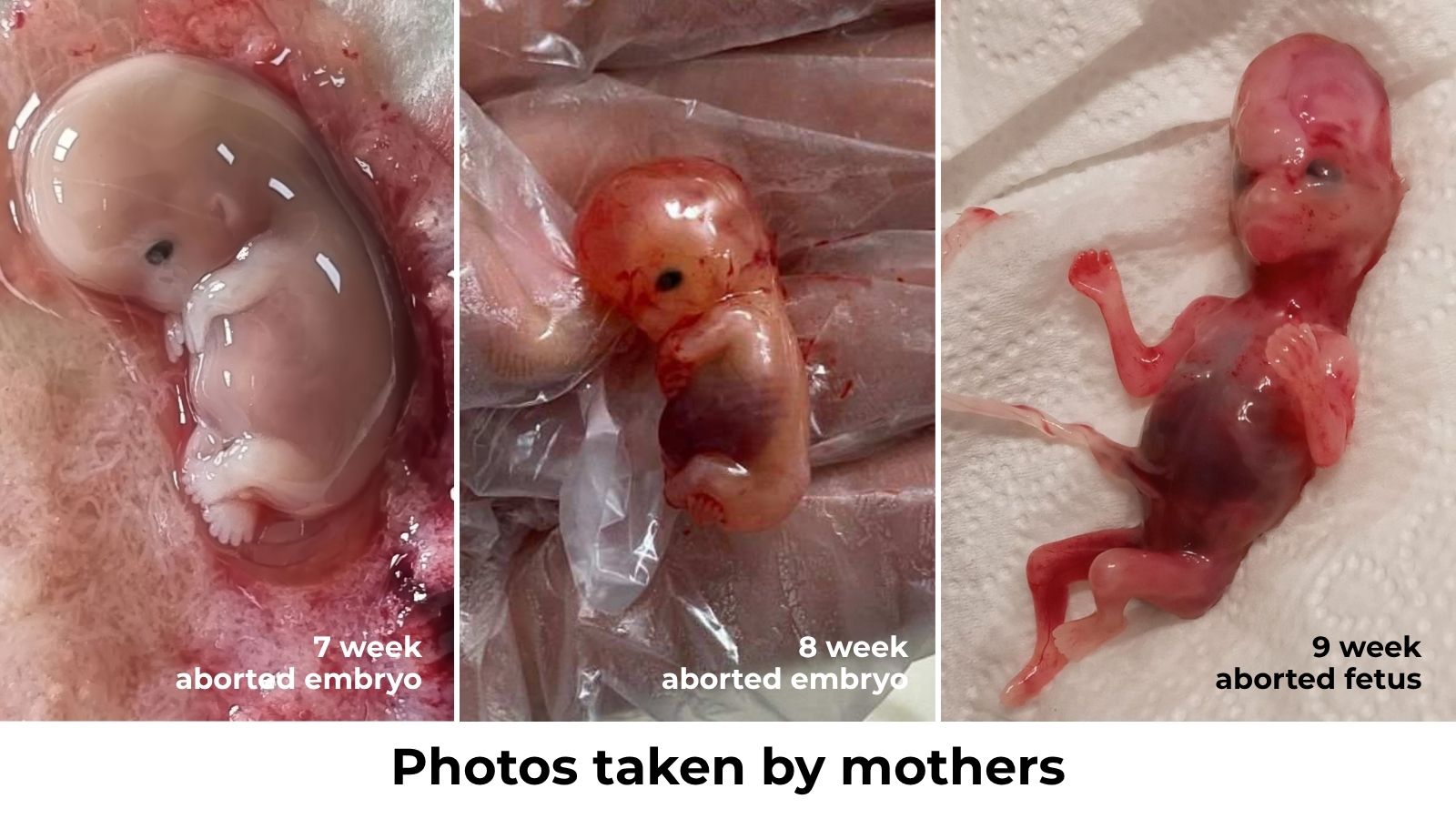
…You may see other tissue when you pass the pregnancy. This is larger and more recognisable at higher gestations, but in most cases the fetus cannot be seen without magnification.
When in reality women are posting photos of their aborted embryos and fetusus online:
Click to see some of these images (Warning - graphic)
Disposal of human remains
Abortion providers, like BPAS, advise women that their baby’s body or “pregnancy remains” can be “flushed down the lavatory or wrapped in tissue, put in a small plastic bag and put in the dustbin."
Distributing lethal pharmaceuticals by post, instructing women to manage severe bleeding alone at home, and advising them to dispose of human remains in household waste is extremely dangerous and not compassionate medical care.
More on Pills by Post / DIY abortions here.
BPAS’ Pills-by-Post treatment instructions can be viewed here
Abortion harms to women
The narrative promoted by the abortion industry claims that abortion is a routine, harmless quick-fix. The physical and emotional reality experienced by thousands of women reveals a completely different story.
Physical Complications & Emergency Care
-
1 in 17 women who use abortion pills at home require hospital treatment for severe complications, such as hemorrhaging, incomplete abortion, or sepsis.
-
33 women a day are admitted as inpatients to NHS hospitals for treatment of abortion complications.
Long-term emotional and psychological impact
Post-abortive women routinely report feeling lied to by providers who minimized the physical pain, bleeding, and psychological aftermath.
-
81% increased mental health risk: Studies show an 81% increased risk of mental health struggles following an abortion, including severe depression, unresolved grief, and anxiety.
-
Elevated substance abuse: Drug and alcohol misuse rates are up to 250% higher among women who have undergone an abortion compared to those who have not.
“Abortion wasn’t healthcare for me” - Hear women’s stories
Kirsty, 36, from Midlands, tells her story:
“I just remember lifting up my blanket and it being like a scene from a horror movie”
“I was left really heavily bleeding for months afterwards. I was at a point where I didn’t wanna wake up anymore because I’ve lost a part of me”.
"my home is not my home, my happy safe place. It’s the place where it took away my child"
The science of life in the womb
Language is often manipulated to sanitize the reality of abortion. Terms such as "embryo" or "fetus" do not describe non-human matter; they simply designate age and stage of development—just like "infant," "toddler," or "teenager" do after birth.
When a child is wanted, society rightly calls her a baby. A child's humanity does not depend on whether she is wanted, but on the biological reality of who she is.
Embryological science establishes that a unique human life begins at the moment of fertilisation.
Developmental milestones at 8 weeks from fertilisation:

At 8 weeks from fertilisation:
-
Heartbeat: Her heart has already beaten over 6 million times.
-
Body Form: Fingers, toes, and facial features are fully formed.
-
Biological Structure: Over 90% of adult body parts are already present and developing.
How much does this cost the NHS and taxpayer?
While essential NHS services, surgical backlogs, and critical care face intense rationing, state funding for elective abortion has reached record levels.

A systemic double standard
-
Strict limits on non-healthcare procedures: The NHS strictly restricts funding for lifestyle or cosmetic procedures (such as cosmetic surgeries), requiring rigorous clinical proof of extreme medical necessity.
-
Uncapped funding for elective abortions: In contrast, over 97% of abortions (Ground C) are funded by the NHS for non-extreme reasons. With 42% of all abortions being repeat abortions (where the mother has had previous abortions).
-
Private profit from public funds: The NHS contracts out roughly 80% of all abortions to private independent providers—primarily BPAS (~45–50%) and MSI Reproductive Choices (~25–30%)—channeling tens of millions of pounds in taxpayer funds into high-throughput abortion operations annually.
What do the public think?
We asked people on the streets of London if abortion is healthcare, then we showed them the images.
Look out for our teams around the UK with our public education displays challenging the narrative that abortion is healthcare. Join a team near you.
Take action: Help us restore real healthcare
Mothers and babies deserve genuine healthcare, support, and protection—not the intentional destruction of valuable lives in the womb.
How you can get involved:
-
Share the message:
Help expose the facts by sharing this webpage, our videos, informational posts across your networks and social media asking the question - Is abortion healthcare? -
Share your story (post-abortive women):
If you have been impacted by abortion and want to share your experience anonymously or publicly to help spare other women from harm, submit your testimony through our confidential survey. -
Engage your local community & representatives:
Challenge local Integrated Care Boards (ICBs) and MPs on why taxpayer funds are being funneled into private abortion providers for elective abortions while vital health services face severe cutbacks. Using the facts and links/sources on this page. -
Find healing and support:
If you are struggling with post-abortion grief, trauma, or regret, compassionate help and confidential recovery programs are available. Visit Postabortsupport.org.uk